

Circularity energy
Improving our packaging, journeys and consumption
Recyclable, properly sorted, better recycled
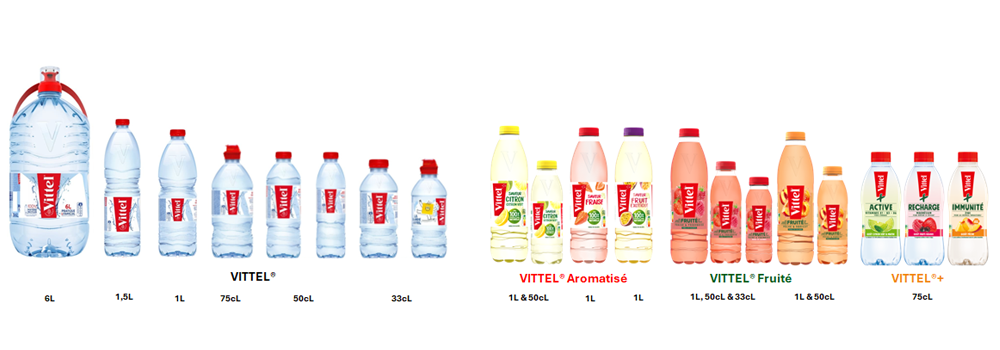
For natural mineral waters, formats from 33cL to 75cL are made from 100% recycled materials excluding cap and label, as is our 6L container excluding cap, label, handle and pouring spout.
The 1L to 1.5L bottles contain 30% recycled materials excluding cap and label. Finally, our flavoured beverages are also made from 100% recycled plastic excluding cap and label. Let us contribute together to the circular economy: when properly sorted, plastic bottles are genuine resources and not simply waste, thanks to YOU. Remember to sort!
The recyclability of our bottles
All VITTEL® bottles from the 33cL format to the 1.5L format are recyclable bottle and cap, excluding label. When properly sorted and recycled, they can become new bottles. So, to help give them a second life and take positive action, follow the instructions on all our VITTEL® labels.
To raise awareness among as many people as possible, VITTEL® works hand in hand with major players in the field of packaging management, such as CITEO, to encourage the general public to adopt simple sorting practices that are more responsible for the environment. Alongside them, we are committed to communication campaigns to encourage these good practices over the long term, as well as to the development of sorting and recycling channels.


Reducing plastic, starting with the design of our packaging
For example, the weight of the 1.5L VITTEL® mineral water bottle decreased by more than 20% between 2015 and 2020. Reducing plastic also involves innovation. The latest big little addition to the VITTEL® family, the 6L family format, reduces the amount of plastic used per litre by 20%1.
1 Compared with a pack of six 1L bottles of VITTEL® natural mineral water


Réemployer, c’est prolonger la vitalité de nos bouteilles
Le verre est un matériau réutilisable et l'histoire de VITTEL® au XIXème siècle s'est écrite avec la bouteille en verre consignée ! Encore aujourd'hui sur le marché français, 90 % de nos bouteilles en verre vendues dans les cafés, hôtels et restaurants en France sont consignées pour être réemployées2.
Et nous allons plus loin : en collaboration avec d’autres acteurs, nous testons de nouveaux systèmes pour développer la consigne pour réemploi en grande distribution. Une démarche à suivre de près… dans vos supermarchés !
2 Données 2024
FROM THE BOTTLE TO THE FACTORY, EVERY ACTION COUNTS


At the heart of the VITTEL® factory: we choose renewable energy
Today, 100% of the electricity purchased for our factories is certified as being of renewable and French origin2, generated in particular by wind turbines and solar panels. Electricity from renewable sources emits less carbon than fossil fuels.
2 A volume of renewable electricity equivalent to the consumption of our factories is fed into the electricity grid through the purchase of guarantees of origin certificates.


More responsible transport: moving vitality differently
VITTEL® is taking concrete action to reduce the carbon impact of transporting its products by relying on innovative solutions that reduce the use of fossil fuels.
Since 2017, we have strengthened our commitment to the FRET 21 initiative, particularly by increasing the number of wagons per train, optimising routes and inaugurating a hybrid locomotive linking our production site to the warehouse in Arles, in the South of France.
In addition, in March 2025, a biogas refuelling station was inaugurated less than one kilometre from our Vosges factory, in partnership with Methavair. This pilot project supplies some of the trucks in our fleet* as well as other local hauliers and private individuals. It contributes to the development of alternative mobility solutions at local level.
* In 2026, four trucks equipped with biogas technology refuel at this station.